There are moments when something long carried is struck — not to announce itself, but to be heard again.
The sound is not new.
It does not persuade.
It does not seek agreement.
It resonates.
Remembrance is often mistaken for memory, or attachment to the past. In truth, it has nothing to do with nostalgia. It is orientation — the recognition of what remains intact beneath changing conditions. When remembrance occurs, it is not ideological. It is somatic. The body recognizes coherence before the mind supplies language.
This is not an argument.
It is a record.
The role of the artist, as Nina Simone observed, is to reflect the times. Not to mirror their noise, but to reveal their structure. To make visible what is already being lived, but not yet fully seen.
This text is such a reflection.

Continuity does not announce itself.
It does not require validation.
It is carried through practice, repetition, and discipline — through forms that transmit orientation rather than opinion. Continuity lives in the body before it lives in language. It is preserved not because it is defended, but because it works.
Lineage is often reduced to heritage alone. In truth, lineage is heritage made active — an intelligence refined through time, tested under pressure, and transmitted through embodied continuity. It carries proportion, timing, restraint, and response. It teaches how to move, how to hold, and when to remain silent.
Those who stand inside continuity do not need to chase the times.
They remain intact as the times move around them.
From this ground, change is not theorized.
It is observed.

There are periods when power does not impose itself through force, but through reorganization.
Not of laws alone — but of tempo.
When rhythm is interrupted, orientation falters. The ordinary structures through which humans regulate themselves — movement, proximity, breath, repetition, physical presence — are altered or suspended. What follows is not merely inconvenience, but dislocation.
Fear becomes ambient rather than acute.
Distance is moralized.
Compliance is framed as care.
Some surrender their orientation quickly, relieved to be told what to do. Others search, question, cross-reference — attempting to reconcile what they feel with what they are told. And some do not need information at all. Their bodies register misalignment before language arrives.
This divide is not ideological.
It is perceptual.
History shows that systems seeking order without wisdom always begin by disrupting rhythm. When humans are separated from their own sensing, external orientation becomes easier to impose. Language shifts. Posture follows. Breath shortens. Life becomes legible, then administrable.
When rhythm is interrupted, administration becomes possible.
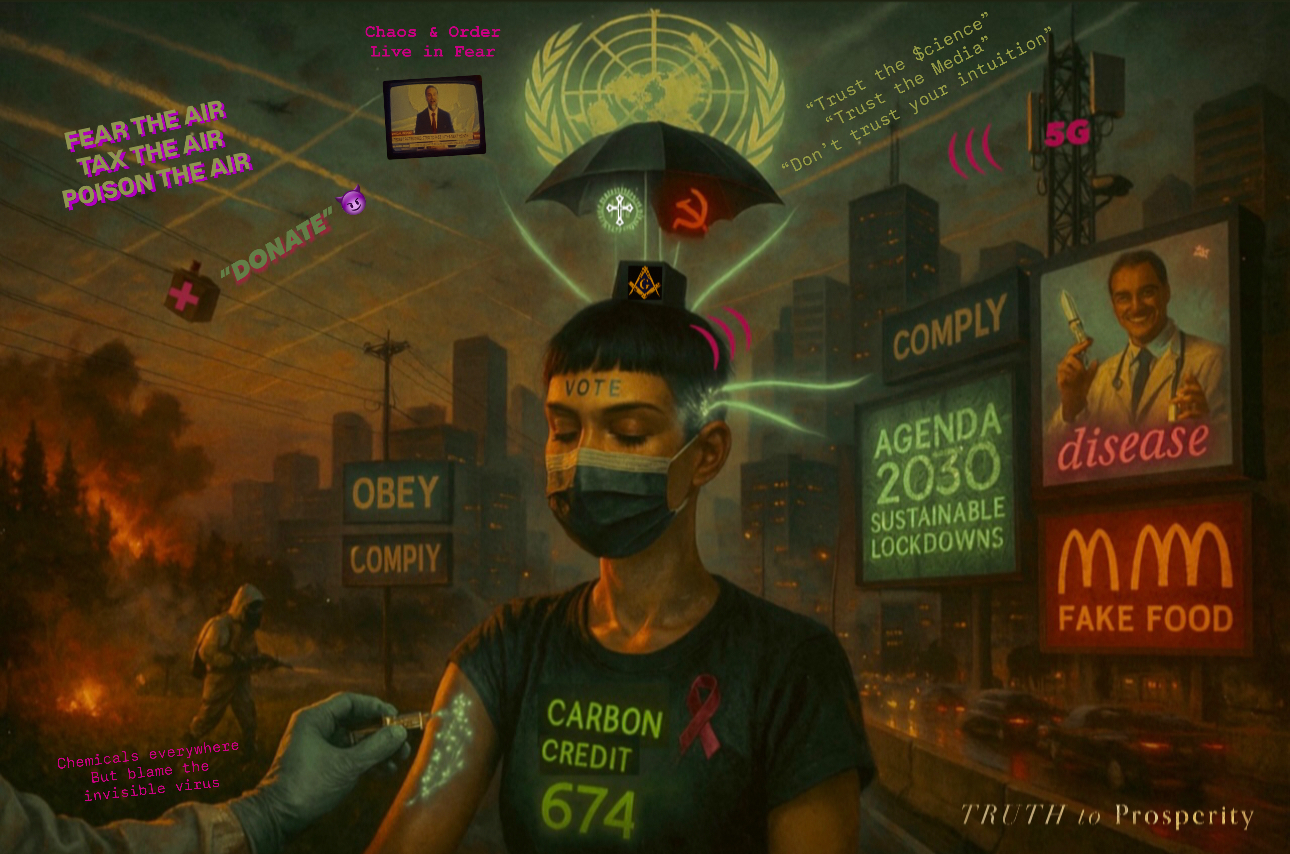
What was once understood as the natural intelligence of Life moving through the body is increasingly reframed as something unstable — a variable to be measured, restricted, and controlled.
Vitality is no longer assumed to be self-regulating.
It is treated as a risk.
Health becomes compliance with prescribed norms. Energy is evaluated against pre-established thresholds. Movement is authorized, limited, or suspended. The body, once trusted as a source of orientation, is repositioned as a system requiring oversight.
This shift does not present itself as domination.
It arrives as care.
The systems that follow are comprehensive. Urban environments, workplaces, educational structures, and digital interfaces are reorganized to reduce unpredictability and maximize behavioral legibility. Life is shaped to fit models. Deviation is reframed as inefficiency. Autonomy becomes exposure.
Smart systems are not neutral. They encode assumptions about how humans should live, move, interact, and rest. Sensors replace direct perception. Dashboards replace judgment. Algorithmic thresholds stand in for lived discernment.
The body becomes data.
The environment becomes a control surface.
Under administration, vitality is not cultivated. It is permitted within limits. Expression is allowed insofar as it remains measurable, legible, and correctable. What exceeds the model is flagged. What cannot be tracked is discouraged.
This is not health.
It is containment.
Experience becomes increasingly mediated. Attention fragments. Sensation flattens. Time compresses into continuous immediacy. The consequence is not silence, but saturation.
A nervous system held in constant stimulation loses depth. A body deprived of genuine physical orientation loses trust in its own signals. When vitality is suppressed in this way, compliance no longer requires enforcement. It emerges as fatigue, confusion, and dependency.
Disembodied people are easier to manage.
Yet vitality does not disappear.
It resists quietly.
It appears as unease with environments that function but do not nourish. As refusal to fully assimilate into systems that demand submission of rhythm, instinct, and embodied intelligence.
This is not rebellion.
It is recognition.
Freedom is not granted by systems.
It is preserved through continuity.
Lineage carries freedom forward not by opposing the times, but by outlasting them. It transmits orientation rather than instruction. It teaches discernment without ideology, rhythm without enforcement, authority without display.
Those who carry lineage do not need to announce resistance.
They remain coherent.
Time, when allowed to unfold rather than compress, restores vitality on its own. Rhythm returns. Orientation stabilizes. Life reasserts itself without permission.
This is not regression.
It is continuity.
The gong is not struck to awaken the unaware.
It is struck because it has always been there — waiting for those who still recognize the sound.